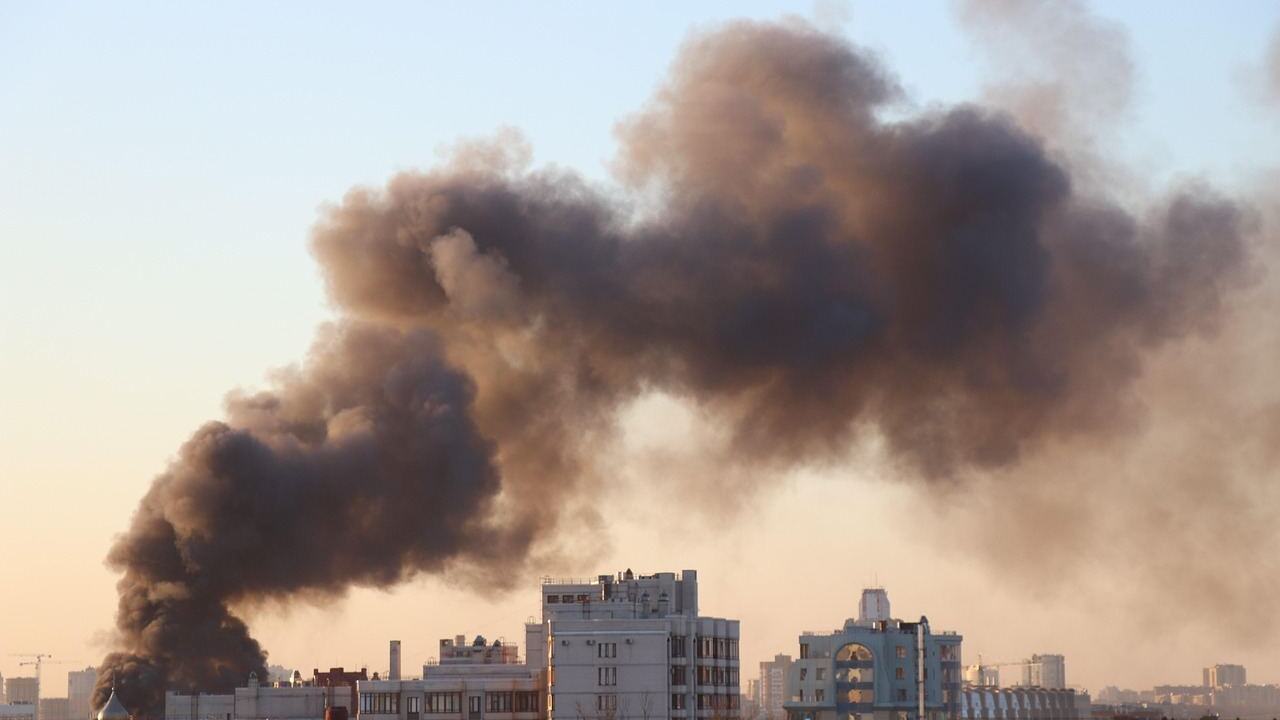
Wondering what actually fouls the air you breathe? The main causes of air pollution are burning fuels in homes, vehicles, power plants and industry, plus dust, fires and gas reactions. Here is how each source works.
This guide sits within our wider coverage of environmental issues.
| Item | Value |
|---|---|
| Premature deaths linked to ambient and household air pollution combined | 6.7 million per year |
| Deaths attributed to ambient (outdoor) air pollution | 4.2 million per year |
| Deaths from household air pollution | 2.9 million in 2021 |
| People cooking with open fires or inefficient stoves | Around 2.1 billion |
| Population living where air pollution exceeds WHO guidelines | More than 99% |
| Reliance on polluting fuels and technologies in 2021 | 49% of rural population, 14% of urban population |
The figures come from the WHO’s types of pollutants page and its Africa regional air pollution page. Estimates can change when new data is published, so check the sources before you rely on them.
What counts as air pollution?
The WHO’s Africa regional page describes air pollution as contamination of the indoor or outdoor environment by any chemical, physical or biological agent that modifies the natural characteristics of the atmosphere. In practice, that means smoke, gases and tiny particles released by everyday activities.
Pollutants with the strongest evidence for public health concern are:
- particulate matter (PM)
- carbon monoxide
- ozone
- nitrogen dioxide
- sulfur dioxide
Causes fall into two broad groups: ambient (outdoor) pollution and household pollution. The WHO’s types of pollutants page attributes 4.2 million deaths a year to ambient air pollution, and the Africa regional page estimates 2.9 million deaths from household air pollution in 2021. Together, the two are associated with 6.7 million premature deaths annually.
The two groups overlap. The WHO notes that both can come from similar processes such as incomplete combustion of fuels or chemical reactions between gases, even though the specific source varies (WHO).
Cooking and heating at home
Around 2.1 billion people worldwide cook using open fires or inefficient stoves, according to the WHO’s Africa regional page. The fuels involved are:
- kerosene
- biomass, meaning wood, animal dung and crop waste
- coal
The greatest source of particulate matter around the home is generally the combustion of polluting fuels in open hearths or poorly vented, inefficient stoves or space heaters (WHO). In poorly ventilated dwellings, indoor smoke can have levels of fine particles 100 times higher than acceptable (WHO Africa).
Other household activities add to exposure, including preparing animal fodder, heating water for bathing and brewing beverages. Furnaces, fireplaces, gas stoves and ovens are household sources of nitrogen oxides (WHO).
The gap between city and countryside is wide. In 2021, only 14% of people in urban areas relied on polluting fuels and technologies, compared with 49% of the global rural population (WHO Africa).
Traffic, power plants and industry
Outdoors, a leading driver is high-temperature combustion. The WHO lists vehicles, industries and power generating facilities as contributors to ambient air pollution (WHO).
Nitrogen dioxide is a clear example. Its ambient sources are high temperature combustion of fuels in heating, transportation, industry and power generation, and it is an important ozone precursor (WHO).
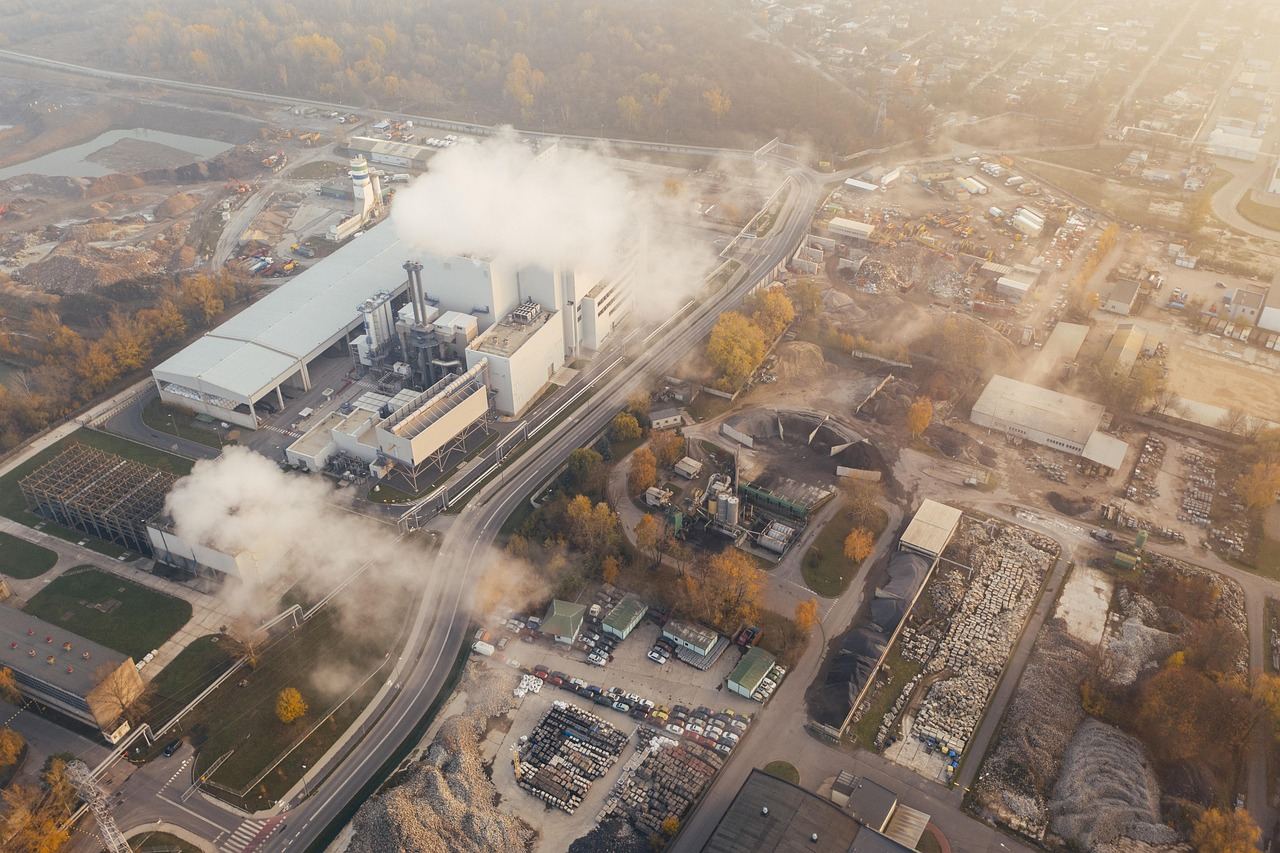
Ground-level ozone is a major component of smog. It forms from photochemical reactions involving volatile organic compounds, carbon monoxide and nitrogen oxides emitted from vehicles and industry, so the highest levels appear during sunny weather (WHO).
Dust, fires and chemistry in the air
Not every source is a machine. Coarse particles, with a diameter between 2.5 µm and 10 µm, mainly consist of pollen, sea spray and wind-blown dust from erosion, agricultural spaces, roadways and mining operations (WHO).
Finer particles can come from primary sources, such as fuel combustion, or from secondary sources, meaning chemical reactions between gases. The US EPA’s archived page says most particles form in the atmosphere from reactions of chemicals such as sulfur dioxide and nitrogen oxides emitted from power plants, industries and automobiles (EPA).
Typical outdoor sources of particulate matter include traffic and transportation, industrial activities, power plants, construction sites and waste burning (WHO). In rural and peri-urban areas, the WHO’s Africa regional page adds agricultural waste incineration, forest fires and charcoal production.
To picture the scale, the EPA’s archived page says the average human hair is about 70 micrometers in diameter, which is 30 times larger than the largest fine particle (EPA). Particles that small can get deep into your lungs, and some may reach your bloodstream.
Why the causes matter and what reduces them
The WHO says particulate matter can penetrate deep into the lung and enter the bloodstream, with cardiovascular, cerebrovascular and respiratory impacts. For some pollutants, there are no thresholds below which adverse effects do not occur, and more than 99% of the population live in areas above WHO air quality guidelines (WHO).
For cities, the WHO’s Africa regional page says policies and investments supporting cleaner transport, energy-efficient housing, power generation, industry and better municipal waste management would reduce key sources of urban outdoor air pollution. It also lists clean household options such as solar, electricity, biogas, liquefied petroleum gas, natural gas and alcohol fuels.
Progress on clean cooking is uneven. The same page projects that only 78% of the global population will have access to clean cooking by 2030, leaving nearly 1.8 billion people without it (WHO Africa).
Cleaner air also helps the climate, because reducing outdoor air pollution reduces emissions of carbon dioxide and short-lived climate pollutants such as black carbon and methane. If you want practical steps, read how to reduce your carbon footprint. For a different kind of contamination, you can also read about the plastic pollution effects on our site.
Frequently asked questions
What is the biggest cause of indoor air pollution?
Show answer
Burning polluting fuels such as kerosene, biomass and coal in open fires or inefficient stoves. The WHO calls this the greatest source of particulate matter around the home.
What is the difference between PM2.5 and PM10?
Show answer
PM10 means inhalable particles with diameters generally 10 micrometers and smaller. PM2.5 means fine inhalable particles with diameters generally 2.5 micrometers and smaller, according to the EPA’s archived page.
Why is ozone worse in sunny weather?
Show answer
Ground-level ozone forms through photochemical reactions between pollutants such as nitrogen oxides and volatile organic compounds. Sunlight drives those reactions, so levels peak in sunny weather.
Who is most exposed to household air pollution?
Show answer
Women and children, who typically handle cooking and collecting firewood, bear the greatest health burden from polluting fuels and technologies in homes, according to the WHO.