Worried that climate change could suddenly become irreversible? Climate tipping points are thresholds where a system shifts into a new state; scientists say several lie near 1.5°C of warming, and warm-water coral reefs may already have crossed theirs.
This explainer sits within the wider topic of climate change, where you can find the background to the thresholds below.
| Item | Value |
|---|---|
| Warm-water coral reefs: central estimate of thermal tipping point | 1.2°C of global warming |
| Systems likely to tip around this level: land permafrost, Greenland ice sheet, West Antarctic ice sheet, sub-polar gyre | Around 1.5°C of global warming |
| Systems likely to tip around this level: mountain glaciers, boreal forests, AMOC | Around 2.0°C of global warming |
| Tipping system interactions assessed in the report | 20 |
| Share of assessed interactions that involve the AMOC | 45% |
| People who depend on coral reef resources for their livelihoods | Nearly 1 billion |
These figures come from the Global Tipping Points Report summary and from Science News Explores coverage of it. They can change as new research arrives, so check the sources before you rely on them.
What are climate tipping points?
A tipping point is a point where the effects of many smaller changes cause a sudden big change in Earth’s climate, as Science News Explores puts it. Think of the last straw that breaks a camel’s back.
The Global Tipping Points Report describes these risks as different to other climate impacts. They are often marked by irreversibility, deep uncertainty and the potential for cascading failures across natural and human systems, according to the report’s 2025 summary.
The warming that pushes systems toward these thresholds comes from greenhouse gases. For the background, read about what causes climate change.
Warming thresholds for the main systems
Different systems have different thresholds, and the estimates are not all equally certain. As of the Global Tipping Points Report 2025, the picture looks like this:
- Around 1.5°C: land permafrost, the Greenland ice sheet, the West Antarctic ice sheet and the sub-polar gyre.
- Around 2.0°C: mountain glaciers, boreal forests and the Atlantic Meridional Overturning Circulation (AMOC).
- Already passed on the central estimate: warm-water coral reefs, at 1.2°C.
- Below 2°C: the Amazon rainforest, where deforestation and climate change combine.
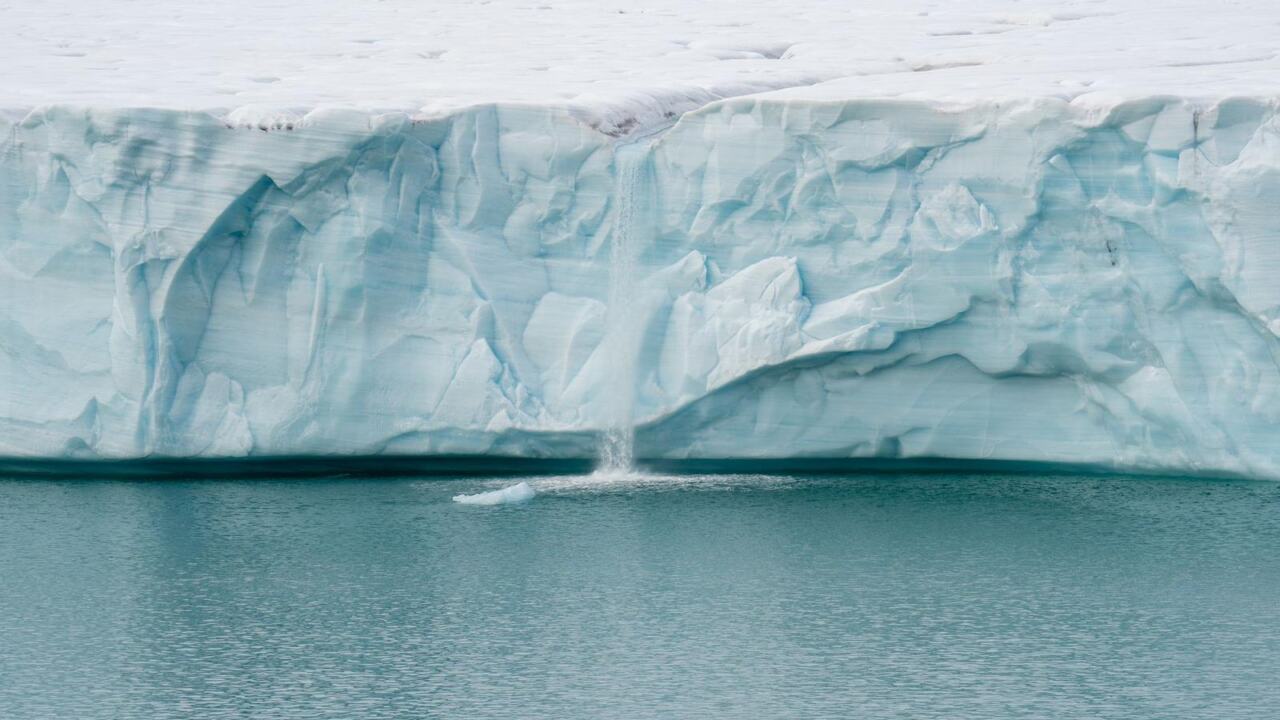
The report says crossing these thresholds becomes more likely for each 0.1°C of global warming. It also reports high confidence that ice sheets have warming tipping points leading to irreversible collapse, and that they have been at risk since at least 1°C of warming, as the report summary explains.
Coverage in Oceanographic adds that the report lowers the estimated Amazon dieback threshold to as little as 1.5°C.
Not every candidate system is settled. The report summary says recent modelling supports the Indian summer monsoon having tipping dynamics, although evidence remains limited, while evidence against tipping dynamics in the jet stream has strengthened. It also now recognises river deltas and peat bogs as potential tipping systems, so the list of systems being watched keeps growing. Treat any single threshold as a best estimate rather than a fixed line.
Have coral reefs already tipped?
As of the Global Tipping Points Report 2025, released in October 2025, scientists say warm-water coral reefs are the first major system to cross its tipping point. The report points to the worst bleaching event on record over 2023-25, according to its summary.
Down To Earth reports that 84.4 per cent of coral reefs across 82 countries were affected by record ocean temperatures. Reefs are also vital to people, since nearly 1 billion rely on ocean resources, as Science News Explores notes.
The outlook is not all lost, but it is narrow. Oceanographic reports that reefs are reaching their thermal limits at 1.4°C of warming, that stabilising at 1.5°C will not prevent widespread collapse, and that only a return to around 1°C plus aggressive local conservation offers hope for remaining refuges.
How do tipping points affect each other?
Tipping systems are linked, and interactions tend to raise the risk. Of 20 interactions assessed, most are destabilising, but a few may have a stabilising effect, per the report summary.
The AMOC is the key mediator, featuring in 45% of all assessed interactions. The report also describes a vicious cycle in which permafrost thaw could amplify Arctic sea ice retreat, which could in turn worsen inland permafrost degradation.
Most tipping systems are expected to amplify global warming if they tip. That makes it harder to return to lower warming levels after an overshoot.
If the AMOC shut down, Science News Explores says the Northern Hemisphere could undergo prolonged cooling and sea level could rise by up to 70 centimeters along some Atlantic coastlines.
Who faces the biggest risks?
The report finds that every region faces major impacts, though the kind of risk differs. Its summary points to these examples:
- Small islands and East Asia face critical risks from ice sheet loss.
- South Asia, Southeast Asia and Central America face critical risks from monsoon disruption.
- West Africa faces critical risks from AMOC collapse and monsoon disruption.
- Northwest Europe faces major risks from AMOC collapse.
- The Amazon region faces major risks from rainforest dieback.
The report summary notes that South and Southeast Asia’s 3+ billion people depend on vulnerable monsoon systems. Down To Earth adds that more than 100 million people rely on the Amazon’s resources.
What can limit the risk?
The report’s central message is to minimise peak warming and the time spent above 1.5°C. It calls for ultimately stabilising global warming below 1.5°C before 2100 and below 1.0°C on longer timescales, per the report summary.
Reducing other pressures helps too. For example, halting Amazon deforestation can reduce the likelihood of climate-induced tipping there.
Researchers quoted by Science News Explores say overshooting 1.5°C now looks pretty inevitable, perhaps as early as 2030. That is why limiting the length and size of the overshoot matters.
Solar power, wind energy and electric vehicles have already crossed critical thresholds in some markets, according to Oceanographic. To see how emissions add up in daily life, start with your own carbon footprint.
Frequently asked questions
Is there one single tipping point for the planet?
Show answer
No. The Global Tipping Points Report reviews many separate systems across the cryosphere, the biosphere and ocean and atmosphere circulation, each with its own threshold and level of uncertainty.
Is the AMOC about to collapse?
Show answer
As of the Global Tipping Points Report 2025, a tipping point for the AMOC cannot be ruled out at current warming levels. Limited models and observations mean the likelihood of tipping remains uncertain, per the report summary.
Can a tipping point be reversed?
Show answer
It depends on the system. The report says fast tipping systems are vulnerable even to short-lived overshoots, while slow systems can tolerate temporary overshoots but limit how long the overshoot can last.
Will Arctic summer sea ice tip?
Show answer
The report summary says Arctic summer sea ice is unlikely to reach tipping points. Antarctic sea ice may have a tipping point that could already be underway, although this is highly uncertain.