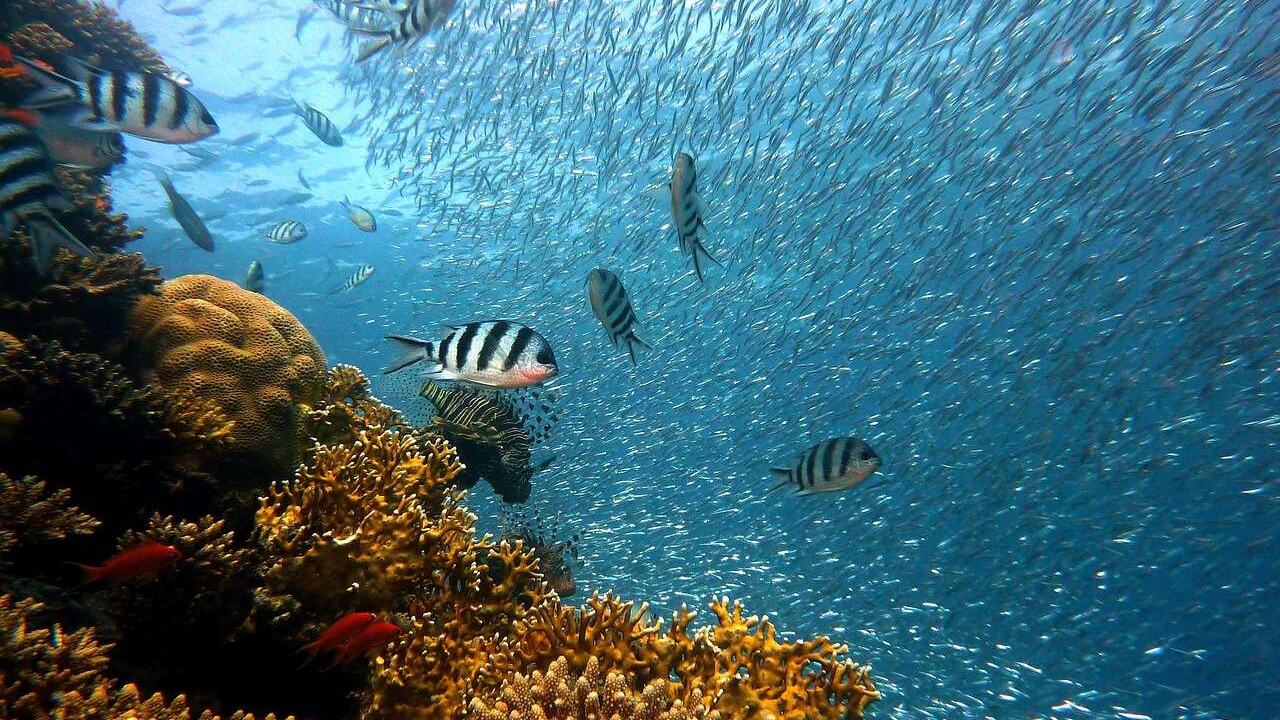
Worried about what a changing sea means for fish, crabs and shellfish? Ocean acidification happens when seawater absorbs more carbon dioxide, lowering its pH and stressing animals that build shells.
Looking for the bigger picture? Ocean acidification is one of the environmental issues covered on this site.
| Item | Value |
|---|---|
| Change in seawater chemistry | Lower pH and greater acidity |
| Global pteropod synthesis published | October 30, 2023 |
| Fastest projected rate of acidification | North and South Equatorial Currents |
| Bristol Bay crab fishery closures possibly linked to acidification | 2021-2022 and 2022-2023 seasons |
| Scale of the Alaska fishery sector at stake | Multi-billion-dollar |
These figures come from NOAA Fisheries and the NOAA Ocean Acidification Program. Research updates and projections can change, so check the source before you rely on them.
What is ocean acidification?
NOAA Fisheries explains that the world’s oceans are absorbing increasingly more carbon dioxide from the atmosphere, which leads to lower pH and greater acidity. It describes this as fundamentally changing the chemistry of the world’s oceans and threatening marine resources. You can read the full explanation on the NOAA Fisheries page.
The term describes a direction of change, not a single event. The ocean is taking up more carbon dioxide, and its chemistry shifts as a result.
A 2023 research synthesis adds that the accumulation of anthropogenic (human-caused) carbon dioxide in the ocean has major ecological, socioeconomic and biogeochemical impacts. It also notes repercussions for the ocean as a critical carbon sink, according to the NOAA Ocean Acidification Program.
Why do shell builders feel it first?
The same synthesis states that ocean acidification disproportionately affects marine calcifiers, the animals that build hard shells. Among them are pelagic, zooplanktonic pteropods, which play a significant role in carbonate export.
Pteropods are small open-water animals with an aragonite shell. According to the NOAA Ocean Acidification Program, that shell is susceptible to rapid dissolution, which makes pteropods one of the most vulnerable groups.
This is why scientists watch pteropods closely. The researchers call them a key indicator for regional monitoring of ocean acidification.
- Their aragonite shells dissolve rapidly when conditions change.
- They are among the most vulnerable groups of shell builders.
- They give monitoring teams an early signal for a region.
Where are the effects hitting hardest?
A global synthesis published in the journal Oceanography on October 30, 2023, looked at where pteropod shell dissolution is most likely. The authors used gridded climatologies of observations and a Regional Ocean Modeling System biogeochemical and ecosystem model, as described by the NOAA Ocean Acidification Program.
The study found that pteropods are most susceptible in these places:
- The polar regions.
- The subpolar North Pacific.
- Eastern boundary upwelling system regions, particularly the California and Humboldt Current Systems.
Pteropods dominate in the polar and subpolar regions. There they are characterized by low aragonite saturation state and low buffering capacity, and extended subsurface dissolution is projected.
The fastest rate of change is a separate question. The authors project the fastest rates of acidification, and of increasing shell dissolution, in the North and South Equatorial Currents. They describe these as regions with the greatest impacts on pteropods and biogeochemical implications.
What does it mean for Alaska’s crabs and fisheries?
NOAA researchers say long-term declines of red king crab in Bristol Bay, Alaska, may be partially attributed to ocean acidification conditions. They add that these impacts may be partially responsible for the fishery closures during the 2021-2022 and 2022-2023 seasons, as reported by the NOAA Ocean Acidification Program.
The wording matters. “May be partially” means acidification is one possible factor, not a proven sole cause.
The same researchers found that ocean acidification negatively affects Alaskan crabs generally in several ways:
- It changes physiological processes.
- It decreases growth.
- It increases death rates.
- It reduces shell thickness.
For fisheries, the stakes are economic as well as ecological. NOAA describes understanding seasonal changes in Alaskan waters, and the potential impacts to the multi-billion-dollar fishery sector, as a main priority.
How are researchers preparing for it?
Scientists at the Alaska Fisheries Science Center continue to investigate how early life stages respond. They also study the potential of various Alaska crabs to acclimate to changing conditions, according to the NOAA Ocean Acidification Program.
The results will feed models that predict the effects of future acidification on Bristol Bay red king crab and the fisheries that depend on them. Fishery managers will then be better able to anticipate and manage stocks if changing ocean chemistry affects stock productivity and the maximum sustainable yield.
Forecasting is a central tool, and the Bering Sea shows how it works in practice:
- The Pacific Marine Environmental Laboratory developed a model that depicts past ocean chemistry conditions for the Bering Sea.
- The team is now testing whether the model can forecast future conditions.
- The model supports an ocean acidification indicator provided to fisheries managers in the annual NOAA Eastern Bering Sea Ecosystem Status Report.
The Bering Sea example shows why a forecast matters to people who do not study ocean chemistry. A model that can depict past conditions gives researchers something to test, and the yearly report puts the resulting indicator in front of fisheries managers in a routine format.
The link to management is direct. Findings on crab growth, death rates and shell thickness are meant to inform models that predict the effects of future ocean acidification on red king crab populations and the fisheries that depend on them. That way, managers have information to work with if stock productivity changes.
More broadly, the NOAA Ocean Acidification Program works to prepare society to adapt to the consequences of ocean acidification and to conserve marine ecosystems as acidification occurs. Its forecasting approach uses models and research to understand the sensitivity of organisms and ecosystems to ocean acidification and to make predictions about the future, according to the program’s publication page.
The sources describe monitoring and preparation rather than a quick fix. Their stated aim is to help communities adapt while acidification occurs, which is why indicators, forecasts and fishery management appear together in the same research effort.
If you want wider context, you can read about the causes of deforestation, another environmental pressure linked to climate change. You can also explore the types of renewable energy that feature in climate solutions.
Frequently asked questions
What is ocean acidification in simple terms?
Show answer
It is the process in which oceans absorb increasingly more carbon dioxide from the atmosphere, leading to lower pH and greater acidity. NOAA Fisheries says it is fundamentally changing the chemistry of the world’s oceans.
Which sea animals are most at risk?
Show answer
Marine calcifiers, the shell builders, are disproportionately affected. Pteropods are one of the most vulnerable groups because their aragonite shells dissolve rapidly, and Alaskan crabs show slower growth, higher death rates and thinner shells in NOAA-funded research.
Did ocean acidification close the Bristol Bay crab fishery?
Show answer
It may have played a part, but the research does not call it the only cause. NOAA researchers say acidification conditions may be partially responsible for the closures in the 2021-2022 and 2022-2023 seasons.
Where is the effect on pteropods strongest?
Show answer
A synthesis published on October 30, 2023, found pteropods most susceptible in the polar regions, the subpolar North Pacific and eastern boundary upwelling regions such as the California and Humboldt Current Systems. It projects the fastest acidification rates in the North and South Equatorial Currents.