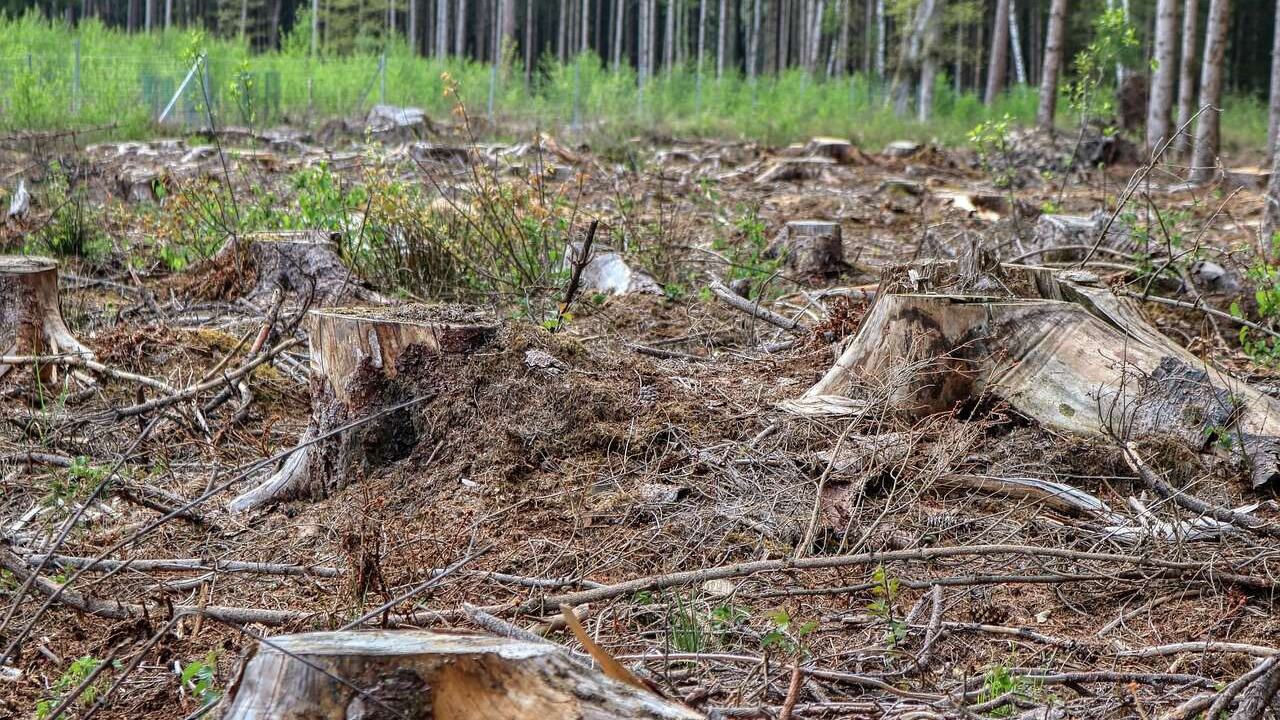
Wondering what is actually clearing the world’s forests? The main causes of deforestation come down to farming: cattle pasture, cropland, oil palm and plantations. Beef alone drove more than 40% of forest loss from 2001 to 2023.
This guide sits within our wider coverage of environmental issues, and it explains the main drivers using published data.
| Item | Value |
|---|---|
| Forest lost since the last ice age | One-third (about 2 billion hectares) |
| Beef’s share of deforestation, 2001 to 2023 | More than 40% |
| Cropland expansion’s share of deforestation, 2000 to 2018 | Almost 50 per cent |
| Livestock grazing’s share of deforestation, 2000 to 2018 | 38.5 per cent |
| Tropical forests’ share of deforestation, 2000 to 2018 | More than 90 per cent |
| UN estimate of annual deforestation in the 2020s | Around 8.5 million hectares |
These figures come from Our World in Data and from a report on a UN survey covered by Down To Earth. Estimates can change as new assessments appear, so check the sources before you rely on them.
Agriculture is the leading cause of deforestation
Humans have been cutting down forests for millennia, mostly to clear land for farming. According to Our World in Data, the world has lost one-third of its forests since the end of the last ice age, 10,000 years ago. That is 2 billion hectares, or an area twice the size of the United States.
Half of that forest was lost by the year 1900, and the other half over the last century, as Our World in Data reports. The loss has been driven by the expansion of both cropland and pasture for livestock grazing. Urban and built-up land is very small by comparison.
A UN survey gives a more detailed split by cause. In the Global Forest Resources Assessment remote sensing survey (FRA 2020 RSS), released in May 2022 and covered by Down To Earth, the main direct causes from 2000 to 2018 were:
- Cropland expansion, including oil palm plantations: almost 50 per cent of global deforestation.
- Livestock grazing: 38.5 per cent of global deforestation.
- Oil palm alone: seven per cent, a share that sits inside the cropland figure.
The same survey found that agriculture is the main driver of deforestation in all regions except Europe, where the combined impact of other drivers was higher, Down To Earth reports.
Which products drive forest loss?
Looking at specific products from 2001 to 2023, beef was by far the largest driver, accounting for more than 40% of the total, according to Our World in Data. More than half of that occurred in Brazil, so Brazilian beef alone contributed one-quarter of global deforestation.
The rest of the ranking from the same source looks like this:
- Oilseeds, dominated by soy and oil palm, were the second largest driver.
- Palm oil production in Indonesia made up the largest share of the oilseed total.
- Forest plantations, used for wood and paper products, came next.
- Cereal production followed.
Agriculture is the main driver, but Our World in Data stresses that the impact is concentrated in only a few commodities: mostly beef, palm oil, soy and forestry products.
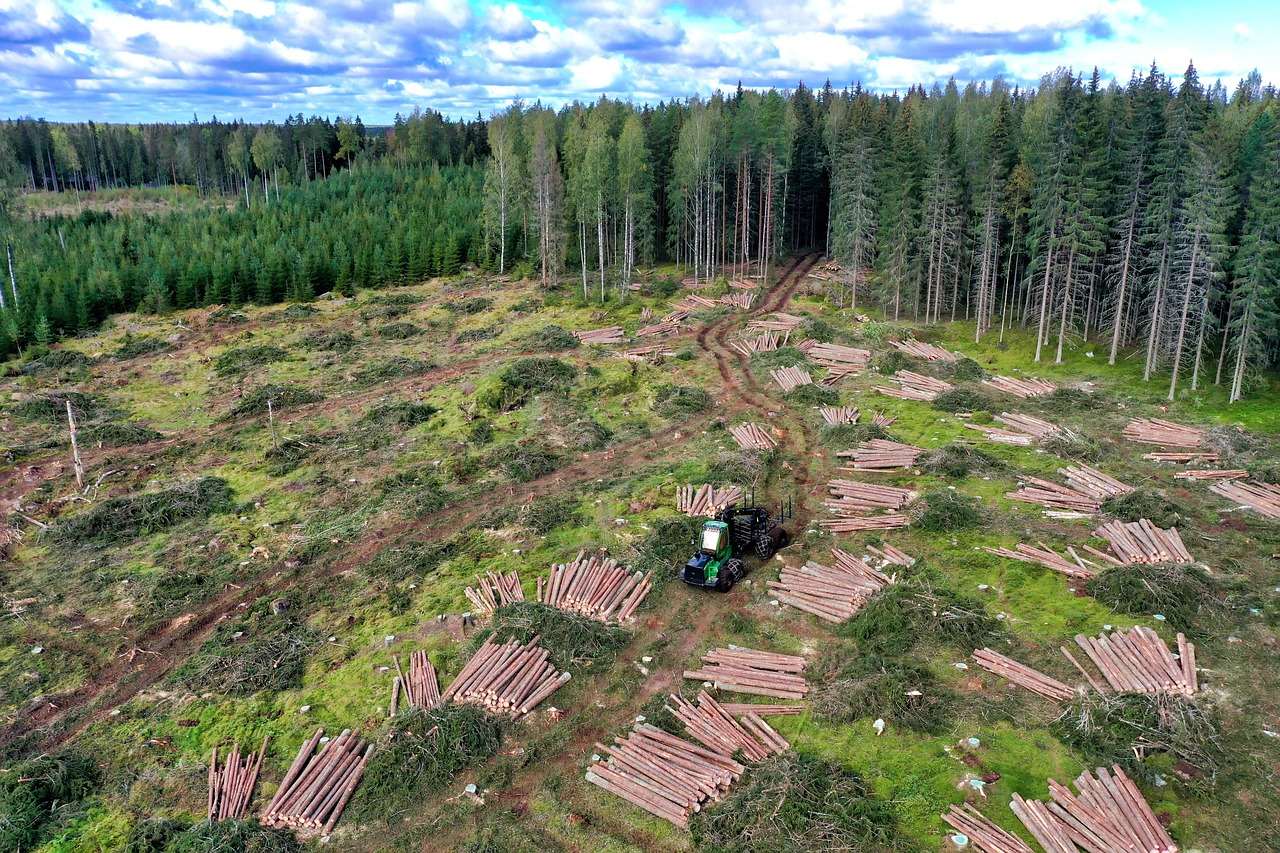
The World Resources Institute’s Global Forest Review tracks a wider list of commodities: cattle, oil palm, soy, cocoa, rubber, coffee and wood fiber. Its maps show which crops now occupy cleared land, not why the land was cleared.
That is a real limit on the data. The analysis cannot determine whether areas were deforested for the purpose of growing the specific commodity or for other reasons, such as harvesting wood products, according to the Global Forest Review.
Where forests are lost and where they regrow
Most deforestation happens in the tropics. The FAO survey reported by Down To Earth found that tropical forests accounted for more than 90 per cent of the deforestation from 2000 to 2018.
The leading cause differs by region, according to the same Down To Earth report:
- In Africa and Asia, conversion to cropland dominates, with 75 per cent of the forest area lost converted to cropland.
- In South America, three quarters of deforestation was due to livestock grazing.
- South America lost around 68 million hectares, the highest in the world, followed by Africa with 49 million hectares.
Not every region is losing forest. Our World in Data shows most of Europe and many parts of Asia seeing gains in forest cover, while countries across the Americas, much of Africa and parts of South-East Asia are still losing forests.
Because tropical primary forests are rich in biodiversity, ending forest clearing is central to tackling biodiversity loss. The same source says that bringing deforestation to an end is essential to protecting the world’s biodiversity and tackling climate change.
Why estimates of forest loss differ
Researchers separate direct drivers, which are the immediate cause of the loss, from indirect drivers, which are the secondary cause, such as land speculation. This is the definition used by the Global Forest Review. A farm that replaces a forest is a direct driver, while the pressures that made clearing attractive are indirect.
Prices matter too. The Global Forest Review compares forest area replaced by oil palm with the palm oil price to demonstrate the sensitivity of forest area replaced by oil palm to changes in price, as described on its agriculture indicator page.
Cleared land does not always become productive. Around 7 million hectares of deforestation each year was caused by agriculture and forest plantations, but only 5.5 million hectares of that land went on to produce crops, livestock or timber, according to Our World in Data. The rest was cleared but never became productive.
Totals also vary by source and method. Work by Singh and Persson estimated about 211 million hectares of deforestation between 2001 and 2022, an average of 10 million hectares per year, while the UN’s estimate for the 2020s is around 8.5 million hectares per year, as Our World in Data explains. Treat any single total as an estimate.
Has deforestation slowed?
Yes, but it remains high. Our World in Data reports that the global peak was in the 1980s and early 1990s, and that rates have fallen since then. Many temperate countries are now regrowing forests, while tropical deforestation accelerated much later.
The UN survey points the same way. Annual deforestation decreased by around 29 per cent to 7.8 million hectares per year in 2010-2018, from 11 million hectares per year in 2000-2010, Down To Earth reports.
Forests are one part of a wider climate picture. If you want to see how another climate-linked problem plays out at sea, read about ocean acidification.
Frequently asked questions
What is the biggest cause of deforestation?
Show answer
Agriculture is the leading cause. By product, beef accounted for more than 40% of deforestation from 2001 to 2023, according to Our World in Data.
What counts as deforestation?
Show answer
The Global Forest Review defines it as the change from forest to another land cover or land use, such as forest to plantation or forest to urban area. You can read the full definition in its glossary.
Which region has lost the most forest?
Show answer
The FAO survey found that South America lost around 68 million hectares, the highest in the world, followed by Africa with 49 million hectares, as reported by Down To Earth.
Is oil palm a major cause of deforestation?
Show answer
It is significant but smaller than cattle. Oil palm alone accounted for seven per cent of global deforestation from 2000 to 2018, according to the survey covered by Down To Earth.